https://t.co/Qb9Z9DodpQ
— 地域通貨花子1 (@TiikituukaHana) September 25, 2019
This is the short video of Mario Draghi's mention of MMT:
(hat tip to Professor Andrea Terzi)
Draghi: The ECB should look into helicopter money & MMThttps://t.co/48CfSdswF7
欧州中央銀行ドラギ総裁「ECB、…
MMTの様な新しいアイデアを検討すべき」と発言 pic.twitter.com/fpGVmjqQXX
 | Warren B. Mosler #MMT (@wbmosler) |
This is the short video of Mario Draghi's mention of MMT: youtube.com/watch?reload=9… (hat tip to Professor Andrea Terzi) | |
Draghi: The ECB should look into helicopter money & MMT
Liquidity if you have in mind
Objectives like climate change or reduced inequality in a more forceful more effective way
But probably not probably there are different ways to do it
And in fact some of the new ideas about monetary policy like the MMT like a recent
paper presented by various authors amongst which professor Fischer and others
Would suggest different ways of channeling money to the economy
Now these are objectively pretty new ideas
They have been they've not been discussed by the Governing Council and they so we should look at them
but they are not been tested
Is this the best way to allocate?
Liquidity if you have in mind objectives like climate change or reduced inequality in a more forceful more effective way but probably not probably there are different ways to do it.
And in fact some of the new ideas about monetary policy like the MMT like a recent paper presented by various authors amongst which professor Fischer and others Would suggest different ways of channeling money to the economy.
Now these are objectively pretty new ideas.
They have been they've not been discussed by the Governing Council.
and they so we should look at them.
but they are not been tested.
気候変動や不平等の削減などの目的があれば、より強力で効果的な方法で流動性を確保する必要がありますが、おそらくそうではないでしょう。
実際、MMTのような金融政策に関する新しいアイデアの中には、フィッシャー教授をはじめとする様々な著者が最近発表した論文のように、経済にお金を流すための様々な方法を提案するものもあります。
今、これらは客観的に見てかなり新しいアイデアです。
審議会では議論されていませんでした。
だから、見てみるべきなのです
が、テストされていません。
念頭に置いてあれば流動性
気候変動や不平等の削減など、より強力で効果的な方法での目標
しかし、おそらくそれを行う別の方法はおそらくないでしょう
実際、最近のMMTのような金融政策に関する新しいアイデアのいくつかは
フィッシャー教授をはじめとするさまざまな著者が発表した論文
経済にお金を送るさまざまな方法を提案します
今、これらは客観的にかなり新しいアイデアです
それらは統治評議会によって議論されていないので、それらを見なければなりません
しかし、それらは同様にテストされていません
Draghi Says ECB Should Examine New Ideas Like MMT
So what is a central banker to do? Hildebrand’s proposed solution was presented in a paper he wrote with three of his colleagues at BlackRock, the world’s largest asset manager, where he is now vice chairman. Released in August to coincide with the annual Jackson Hole meeting, the paper was co-authored by Stanley Fischer, former governor of the Bank of Israel and former vice chairman of the U.S. Federal Reserve; Jean Boivin, former deputy governor of the Bank of Canada; and BlackRock economist Elga Bartsch. Their proposal calls for “more explicit coordination between central banks and governments when economies are in a recession so that monetary and fiscal policy can better work in synergy.” The goal, according to Hildebrand, is to go “direct with money to consumers and companies in order to enliven consumption,” putting spending money directly into consumers’ pockets.
It sounds a lot like “helicopter money,” but he was not actually talking about raining money down on the people. The central bank would maintain a “standing emergency fiscal facility” that would be activated when interest rate manipulation was no longer working and deflation had set in. The central bank would determine the size of the facility based on its estimates of what was needed to get the price level back on target. It sounds good until you get to the part about who would disburse the funds: “Independent experts would decide how best to deploy the funds to both maximize impact and meet strategic investment objectives set by the government.”
 | Benjamin Braun (@BJMbraun) |
Step 6: Boivin, Fischer and Hildebrand co-author a paper that, acc. to @Schuldensuehner , will be discussed at Jackson Hole. Citing @ericlonners , they urge central banks to "go direct" in the next recession (good idea). Complete with implementation roadmap. pic.twitter.com/MNqESE3zuc | |
Dealing with the next downturn:
From unconventional monetary policy to
unprecedented policy coordination
Authors
Ooo
Elga Bartsch Head of Macro Research, BlackRock Investment Institute
Jean Boivin - Head, BlackRock Investment Institute
Stanley Fischer Senior Advisor, BlackRock Investment Institute
Philipp Hildebrand - Vice Chairman, BlackRock
Key contributor
Simon Wan - Senior Economist, BlackRock Investment Institute
BlackRock.
BIIM0819E-928887-1/16
2
ti 8
31
Tonotaryponcy
maker. Asset manager capitalism meets central bank-led capitalism. /END
ドラギが言及したフィッシャー
Dealing with the next downturn: From unconventional monetary ...
2019年8月30日 ... ... with the next downturn: From unconventional monetary policy to unprecedented policy coordination.
登録制
Dealing with the next downturn: From unconventional monetary ...
2019年8月16日 ... ... with the next downturn: From unconventional monetary policy to unprecedented policy coordination
部分引用
A soft form of coordination would rely on monetary and fiscal policy both providing stimulus when needed. Looking at the policy response during and after the crisis, and as we discussed earlier, there was room for a better policy mix with less reliance on monetary policy and more emphasis on fiscal policy. This is, in principle, a fruitful avenue to explore. Yet there are reasons why that better policy mix was not achieved – chiefly that it is practically and politically easier to resort to monetary policy. These forces are likely to keep prevailing in the future – and those simply hoping for a better form of soft coordination will probably be disappointed.
The charts below highlight how major economies are on a path of neutral budgets or mild deficit consolidation over the next five years based on IMF forecasts as of April 2019. This comes as their debt servicing costs have declined relative to growth – and given the recent plunge in interest rates those debt servicing costs have likely fallen further. See the expected change in the interest bill in the chart on the left below. This implies that fiscal policy is currently not pulling its weight.
This means that in a downturn the only solution is for a more formal – and historically unusual – coordination of monetary and fiscal policy to provide effective stimulus. Already many of the monetary policy tools adopted since the crisis – QE including private sector assets – have fiscal implications. Special facilities such as the eurozone’s Outright Monetary Transactions (OMT) during the sovereign crisis also show how the central bank can throw its balance sheet behind fiscal solutions.
Any additional measures to stimulate economic growth will have to go beyond the interest rate channel and “go direct” – when a central bank crediting private or public sector accounts directly with money. One way or another, this will mean subsidising spending – and such a measure would be fiscal rather than monetary by design. This can be done directly through fiscal policy or by expanding the monetary policy toolkit with an instrument that will be fiscal in nature, such as credit easing by way of buying equities. This implies that an effective stimulus would require coordination between monetary and fiscal policy – be it implicitly or explicitly.
I mean you see million jobs created
Then that means lower inequality because as I said unemployment is the largest source of inequality now
In a sense when you do monetary policy and this holds for eurozone
but for
every central bank in the world
you do monetary policy through
Injecting liquidity through the channels that exist at that point in time
In Europe you have a dominance of banks
So it's a Bank based economy and our monetary policy adds through the lending transmission channel of the banking system
In the United States it acts more through the markets financial markets
but basically that's what you have now
Is this as you said
is this the best way to allocate?
Liquidity if you have in mind
Objectives like climate change or reduced inequality in a more forceful more effective way
But probably not probably there are different ways to do it
And in fact some of the new ideas about monetary policy like the MMT like a recent
paper presented by various authors amongst which professor Fischer and others
Would suggest different ways of channeling money to the economy
Now these are objectively pretty new ideas
They have been they've not been discussed by the Governing Council and they so we should look at them
but they are not been tested as well and
When you look at them
closely
You realize that the task of distributing money to one subject or the other subject
That's typically a fiscal task It's the government's decision
It's not the central bank and you would certainly want to have the central bank
Deciding who should receive the money So the there are several issues that need to be
Explored with these new ideas
but one key issue is the political governance of these ideas that needs to be addressed
Thank you
Thank You Antonia Rinaldi ID
Gratia bolero you need
https // youtube / _ooZkThbiY
百万のジョブが作成されていることを意味します
それは不平等がより低いことを意味します
ある意味では、金融政策を行うとき、これはユーロ圏にも当てはまります
でも
世界のすべての中央銀行
あなたはを通じて金融政策を行います
その時点で存在するチャネルを通じて流動性を注入する
ヨーロッパでは銀行が優勢です
銀行ベースの経済であり、私たちの金融政策は、銀行システムの貸出伝達チャネルを通じて追加されます
米国では、金融市場を介してより多くの行動をとる
しかし、基本的にはあなたが今持っているものです
あなたが言った通りですか
これが最適な割り当て方法ですか?
念頭に置いてあれば流動性
気候変動や不平等の削減など、より強力で効果的な方法での目標
しかし、おそらくそれを行う別の方法はおそらくないでしょう
実際、最近のMMTのような金融政策に関する新しいアイデアのいくつかは
フィッシャー教授をはじめとするさまざまな著者が発表した論文
経済にお金を送るさまざまな方法を提案します
今、これらは客観的にかなり新しいアイデアです
彼らは統治評議会によって議論されていないので、彼らを見なければなりません
しかし、彼らは同様にテストされていません
それらを見ると
密接に
あなたはお金を1つの主題または他の主題に分配するタスクに気づく
それは通常、財政的な仕事ですそれは政府の決定です
それは中央銀行ではなく、あなたは確かに中央銀行を持ちたいと思うでしょう
誰がお金を受け取るべきかを決めるので、そうする必要があるいくつかの問題があります
これらの新しいアイデアで探索
しかし、重要な問題の1つは、これらのアイデアの政治的ガバナンスであり、対処する必要がある
ありがとうございました
アントニア・リナルディIDありがとう
あなたが必要とするグラティア・ボレロ
Draghi Says ECB Should Examine New Ideas Like MMT
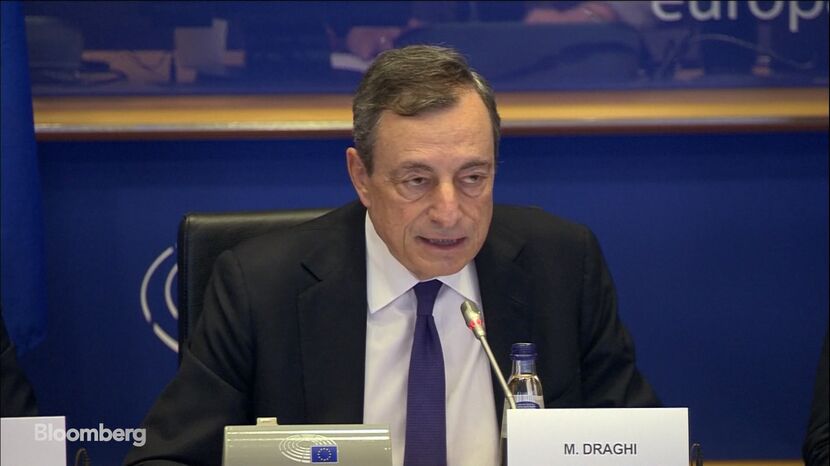
- DraghiはECBがMMTのような新しいアイデアを検討すべきだと言う
https://www.bloomberg.com/amp/news/articles/2019-09-23/draghi-says-ecb-should-examine-new-ideas-like-mmt
DraghiはECBがMMTのような新しいアイデアを検討すべきだと言う
フェルガル・オブライエン2019年9月23日、午前10時35分EDT
Draghiに関連して、ECBはMMTのような新しいアイデアを検討すべきだと言う
取引条件は、貿易戦争に巻き込まれた世界を解きほぐす毎日のニュースレターです。ここからサインアップしてください。
中央銀行総裁のマリオ・ドラギ氏は、統治評議会は近代通貨理論などのアイデアを受け入れるべきであるが、財政政策に近づいており、政府が指示すべきだと述べた。
ドラギは、欧州の議員からのヘリコプターのお金と、不平等を助長するような方法で資金を経済に振り向ける最良の方法についての質問に答えていました。彼はMMTと、ドラギ博士の顧問であるスタンレー・フィッシャー元連邦準備理事会副議長の最近の論文に言及しました。
「これらは客観的にはかなり新しいアイデアです」とドラギ氏は言いました。 「それらは統治評議会によって議論されていません。それらを確認する必要がありますが、テストされていません。」
彼は、そのような行動は流通に関する決定に依存していると付け加えたが、それは金融政策にとっては何かではない、と付け加えた。
「それらをよく見ると、ある主題または別の主題にお金を分配するタスクを実感します。これは通常、財政上のタスクです」と彼は言いました。 「それは中央銀行ではなく政府の決定です...対処する必要があるのは、これらのアイデアの政治的ガバナンスです。」What helicopter money is and why it's in the news again. - Bloomberghttps://www.bloomberg.com/quicktake/helicopter-moneyHelicopter Money
quicktakeBy
Imagine waking one morning to find extra cash in your account, a gift from your country’s central bank. That might sound outlandish — even some proponents of the idea admit it’s unlikely. But the concept of so-called helicopter money has been seriously debated by economists for several years, and is coming back into vogue. That’s because despite the trillions of dollars, euros, yen and pounds that central banks have pumped into the global financial system since the 2008 credit crisis, global economic growth is slowing once again. Helicopter money handed directly to consumers, the theory goes, would send us scurrying to the shops to spend our windfalls, boosting confidence in the economy. That increased demand would allow prices to rise again, a crucial step because a slide in prices, known as deflation, is viewed as creating the risk of extended stagnation. This renewed interest in an idea that’s almost half a century old is evidence that measures previously regarded as daring have become commonplace, repetitive — and increasingly ineffective.The Situation
In July, the U.S. Federal Reserve cut interest rates for the first time in more than a decade and is poised to continue driving borrowing costs down as the outlook for global growth dims. With Germany’s central bank warning that the euro zone’s biggest economy could sink into recession this year, the European Central Bank is also expected to ease monetary policy. Since most governments are unwilling or unable to pursue fiscal stimulus by lowering taxes or increasing spending, there’s pressure on central banks to reach deeper into their toolkits for ever-more unconventional policy tools. Helicopter money is back on the agenda because massive central bank purchases of government bonds — a policy known as quantitative easing — have already driven yields in several bond markets to record lows, so the scope for stimulating the economy by pushing borrowing costs even lower is limited.
How Low Can You Go?
The scope for central banks to drive borrowing costs lower is limitedSource: BloombergThe Background
Milton Friedman came up with the concept of helicopter money in 1969. The Nobel Prize-winning economist envisaged a whirlybird flying over a community dropping paper money from the sky as a thought experiment to see what a never-to-be-repeated increase in the money supply would do to spending and saving. The idea was made famous by Ben Bernanke in 2002 when, as a Federal Reserve governor, he referred to it while arguing that a central bank can always stoke inflation if needed. The nickname “Helicopter Ben” stuck, even though the playbook Bernanke followed as Fed chairman during the recession that followed the financial crisis stopped short of printing money and handing it out to consumers. In an April 2016 blog post, however, Bernanke said helicopter money may be “the best available alternative” under some “extreme circumstances.” In today’s debates, it’s envisaged that helicopter money would be distributed either by crediting people's bank balances or as a tax rebate. The key is that it would come from a one-time creation of money by the central bank, rather than being borrowed by the government or coming out of existing spending.The Argument
“Monetary policy is exhausted and fiscal policy alone is not enough,” is how three former central bankers — ex-Swiss central bank chief Philipp Hildebrand, former Federal Reserve and Bank of Israel staffer Stanley Fischer, and Jean Boivin, ex-deputy governor of the Bank of Canada — made the case in August. Central banks, the trio wrote in an article for their current employer, BlackRock Inc., need to put money “directly in the hands of public and private sector spenders,” though they advocated a more cautious approach than an unlimited helicopter program. Other supporters of helicopter money argue that it may be less risky than quantitative easing, which has been blamed for fueling what some see as a bubble in global stock and bond markets. It’s also possible its benefits would be spread more broadly. Opponents point out that helicopter money isn’t really free. Printing more money devalues the buying power of what savers have in their accounts, in the same way that a company selling new shares dilutes the holdings of its existing stockholders. Others say helicopter money is an overly complicated substitute for the fiscal stimulus governments should be providing. There’s also the danger that helicopter money could trigger much higher inflation than the 2% that’s currently deemed desirable, if people thought banks or governments might get addicted to its boost. And it might fail anyway: Given that nothing in economics is currently working out the way the textbooks promised, people might just save the windfall instead of spending it.The Reference Shelf
- Milton Friedman's 1968 address on “The Role of Monetary Policy.”
- Ben Bernanke’s 2002 speech on how to defeat deflation.
- Bernanke’s April 2016 blog post on helicopter money.
- A paper by Adair Turner, the former chairman of the U.K.’s Financial Services Authority, arguing in favor of the policy.
- Paul Krugman, the Nobel Prize-winning economist, made an argument that “helicopters don't help.”
- The 2019 BlackRock paper that supports helicopter money.
To contact the writer of this QuickTake:
Mark Gilbert in London at magilbert@bloomberg.netTo contact the editor responsible for this QuickTake:
John O'Neil at joneil18@bloomberg.netFirst published April 28, 2016UP NEXTXi Jinping Should Worry; Life in China Harder With High Prices
ここに来る前は、ブルームバーグターミナルにあります。もっと詳しく知るhttps://youtu.be/_8ooZkThbiY0:00:00.000,0:00:02.000作成された1100万のジョブが表示されるという意味です0:00:02.530,0:00:09.179これは、失業率が現在の最大の不平等の原因であると言ったので、不平等が低いことを意味します0:00 :10.750,0:00:15.660ある意味では、金融政策を行う場合、これはユーロ圏に当てはまりますが、0:00:16.390,0:00:18.390世界のすべての中央銀行0:00:19.330,0:00 :22.080 0:00:23.199,0:00:26.909まで金融政策を行いますその時点で存在するチャネルを通じて流動性を注入します0:00:28.449,0:00:31.649ヨーロッパでは銀行0が支配的です:00:31.689,0:00:39.148銀行ベースの経済であり、金融システムは銀行システムの貸出伝送チャネルを介して追加されます0:00:39.700,0:00:46.499米国では、金融市場を売りますが、基本的にそれはあなたが今持っているものです0:00:47.289,0:00:51.449あなたが言ったように、これはこれを割り当てる最も良い方法ですか? 0:00:52.480,0:00:54.959念頭に置いて流動性0:00:55.629,0:01:01.889気候変動や不平等の削減など、より強力で効果的な方法での目標0:01:02.469,0: 01:05.579しかし、おそらくそれを行うための異なる方法はおそらくないでしょう0:01:05.580,0:01:12.869そして実際、最近の0:01:13.330,0のようなMMTのような金融政策に関するいくつかの新しいアイデア:フィッシャー教授などのさまざまな著者が発表した01:18.899の論文0:01:19.869,0:01:23.849経済にお金を送るさまざまな方法を提案します0:01:24.159,0:01:29.069今、これらは客観的ですかなり新しいアイデア0:01:29.070,0:01:34.799彼らは統治評議会によって議論されていないので、彼らを見る必要があります0:01:34.930,0:01:37.860しかし、そうではありません同様にテストされ、0:01:38.409,0:01:40.329 0:01:40.329,0:01:41.530をよく見ると0:01:41.530,0:01:47.099ある被験者または他の被験者にお金を分配する0:01:4 7.100,0:01:51.750これは通常、会計タスクです。それは政府の決定です。0:01:51.750,0:01:55.349それは中央銀行ではありません。中央銀行0:01:55.869,0:02:02.249誰がお金を受け取るべきかを決めることは確かです。したがって、0:02:03.130,0:02:10.830にする必要のあるいくつかの問題がありますが、これらの新しいアイデアで検討する重要な問題の1つは、これらのアイデアの政治的ガバナンスであり、対処する必要があります0:02:12.310,0 :02:14.310ありがとう0:02:14.440,0:02:16.649ありがとうAntonia Rinaldi ID 0:02:18.220,0:02:20.220必要なGratia bolero
DraghiはECBがMMTのような新しいアイデアを検討すべきだと言う
返信削除https://www.bloomberg.com/amp/news/articles/2019-09-23/draghi-says-ecb-should-examine-new-ideas-like-mmt
DraghiはECBがMMTのような新しいアイデアを検討すべきだと言う
フェルガル・オブライエン2019年9月23日、午前10時35分EDT
Draghiに関連して、ECBはMMTのような新しいアイデアを検討すべきだと言う
取引条件は、貿易戦争に巻き込まれた世界を解きほぐす毎日のニュースレターです。ここからサインアップしてください。
中央銀行総裁のマリオ・ドラギ氏は、統治評議会は近代通貨理論などのアイデアを受け入れるべきであるが、財政政策に近づいており、政府が指示すべきだと述べた。
ドラギは、欧州の議員からのヘリコプターのお金と、不平等を助長するような方法で資金を経済に振り向ける最良の方法についての質問に答えていました。彼はMMTと、ドラギ博士の顧問であるスタンレー・フィッシャー元連邦準備理事会副議長の最近の論文に言及しました。
「これらは客観的にはかなり新しいアイデアです」とドラギ氏は言いました。 「それらは統治評議会によって議論されていません。それらを確認する必要がありますが、テストされていません。」
彼は、そのような行動は流通に関する決定に依存していると付け加えたが、それは金融政策にとっては何かではない、と付け加えた。
「それらをよく見ると、ある主題または別の主題にお金を分配するタスクを実感します。これは通常、財政上のタスクです」と彼は言いました。 「それは中央銀行ではなく政府の決定です...対処する必要があるのは、これらのアイデアの政治的ガバナンスです。」
Before it's here, it's on the Bloomberg Terminal.
返信削除LEARN MORE
https://youtu.be/_8ooZkThbiY
0:00:00.000,0:00:02.000
I mean you see 11 million jobs created

0:00:02.530,0:00:09.179
Then that means lower inequality because as I said unemployment is the largest source of inequality now

0:00:10.750,0:00:15.660
In a sense when you do monetary policy and this holds for eurozone, but for

0:00:16.390,0:00:18.390
every central bank in the world

0:00:19.330,0:00:22.080
you do monetary policy through

0:00:23.199,0:00:26.909
Injecting liquidity through the channels that exist at that point in time

0:00:28.449,0:00:31.649
In Europe you have a dominance of banks

0:00:31.689,0:00:39.148
So it's a Bank based economy and our monetary policy adds through the lending transmission channel of the banking system

0:00:39.700,0:00:46.499
In the United States it acts more through the markets financial markets, but basically that's what you have now

0:00:47.289,0:00:51.449
Is this as you said, is this the best way to allocate?

0:00:52.480,0:00:54.959
Liquidity if you have in mind

0:00:55.629,0:01:01.889
Objectives like climate change or reduced inequality in a more forceful more effective way

0:01:02.469,0:01:05.579
But probably not probably there are different ways to do it

0:01:05.580,0:01:12.869
And in fact some of the new ideas about monetary policy like the MMT like a recent

0:01:13.330,0:01:18.899
paper presented by various authors amongst which professor Fischer and others

0:01:19.869,0:01:23.849
Would suggest different ways of channeling money to the economy

0:01:24.159,0:01:29.069
Now these are objectively pretty new ideas

0:01:29.070,0:01:34.799
They have been they've not been discussed by the Governing Council and they so we should look at them

0:01:34.930,0:01:37.860
but they are not been tested as well and

0:01:38.409,0:01:40.329
When you look at them

0:01:40.329,0:01:41.530
closely

0:01:41.530,0:01:47.099
You realize that the task of distributing money to one subject or the other subject

0:01:47.100,0:01:51.750
That's typically a fiscal task. It's the government's decision

0:01:51.750,0:01:55.349
It's not the central bank and you would certainly want to have the central bank

0:01:55.869,0:02:02.249
Deciding who should receive the money. So the there are several issues that need to be

0:02:03.130,0:02:10.830
Explored with these new ideas, but one key issue is the political governance of these ideas that needs to be addressed

0:02:12.310,0:02:14.310
Thank you

0:02:14.440,0:02:16.649
Thank You Antonia Rinaldi ID

0:02:18.220,0:02:20.220
Gratia bolero you need
返信削除Is this the best way to allocate?
Liquidity if you have in mind Objectives like climate change or reduced inequality in a more forceful more effective way but probably not probably there are different ways to do it.
And in fact some of the new ideas about monetary policy like the MMT like a recent paper presented by various authors amongst which professor Fischer and others Would suggest different ways of channeling money to the economy.
Now these are objectively pretty new ideas.
They have been they've not been discussed by the Governing Council.
and they so we should look at them.
but they are not been tested.
割り振りはこれでいいのか?
返信削除気候変動や不平等の削減などの目的があれば、より強力で効果的な方法で流動性を確保する必要がありますが、おそらくそうではないでしょう。
実際、MMTのような金融政策に関する新しいアイデアの中には、フィッシャー教授をはじめとする様々な著者が最近発表した論文のように、経済にお金を流すための様々な方法を提案するものもあります。
今、これらは客観的に見てかなり新しいアイデアです。
審議会では議論されていませんでした。
だから、見てみるべきなのです
が、テストされていません。